Buyers comparing Bell County suburbs almost always arrive at Harker Heights with a single number in their head. Depending on which portal they last checked, that number sits somewhere between $299,000 and $340,000. The number is real. It is also misleading, because it flattens two very different transactions into one average.
The thesis of this guide is simple. At today's price band, Harker Heights operates as two parallel markets that happen to share a median: an east-side new-construction corridor with builder incentives and warranty structure, and an established resale market where lot size, mature trees, and negotiation room do most of the work. Choosing between them is the real decision. The median only tells you where they intersect.
The friction that shows up before the offer
The first place buyers get tripped up has nothing to do with price. It is a labeling problem.
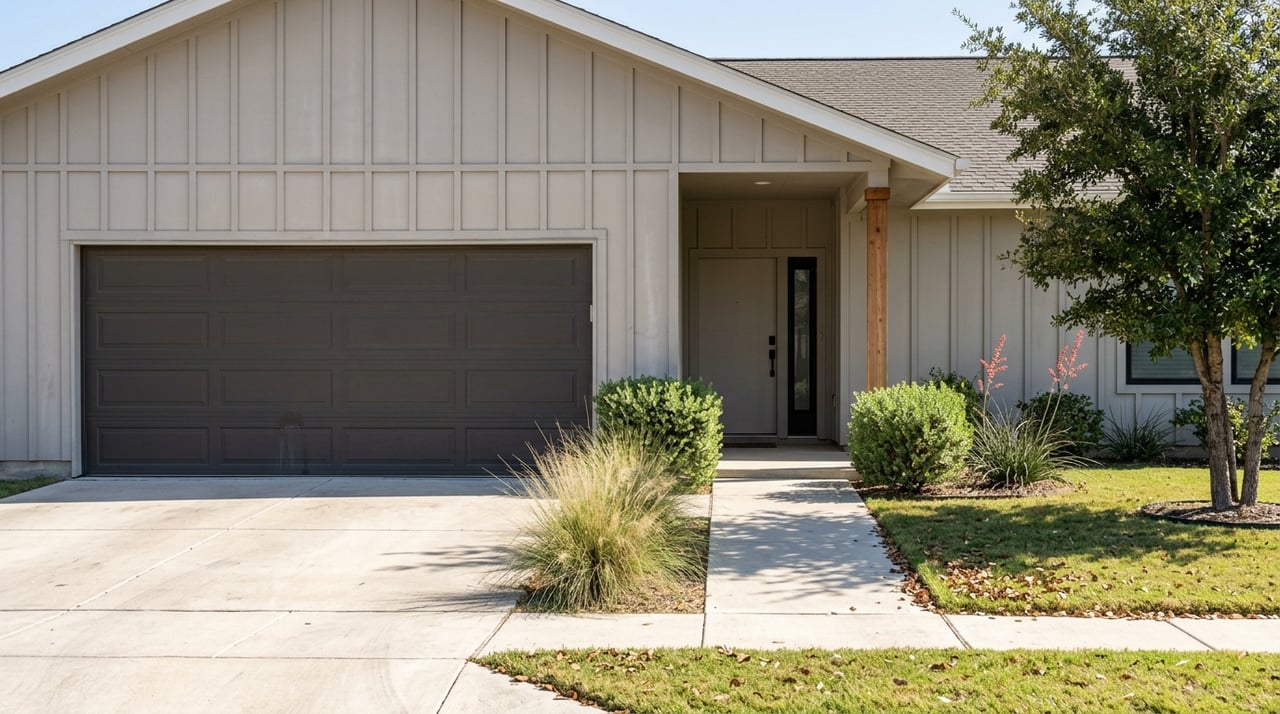
Cedar Trails is one of the more active new-build pockets on the east side. While some builder marketing labels Cedar Trails under Belton, Harker Heights city permits show the subdivision as active within the city's development activity. That difference matters when you are pulling comps, checking utility providers, or estimating your property tax bill. A home marketed as "Belton" but permitted in Harker Heights will not appraise against Belton comps, and the tax jurisdiction that shows up at closing is the one on the deed, not the one on the yard sign.
The second friction is quieter. On any new-construction tour, the person greeting you at the model home is paid by the builder. That is not a problem so long as buyers understand the arithmetic: builder incentives, upgrade credits, and preferred-lender bundles are negotiated inside a system designed by the seller. Bringing your own representation to the first visit, before signing the guest register, preserves your leverage on price, upgrades, and closing costs without adding any cost to you.
Both frictions surface before an offer is written. Both are invisible on a portal listing.
One median, three data sources, three numbers
Depending on the feed, Harker Heights currently reports as a $299K, $322K, or $340K market. This is not a contradiction so much as a snapshot of how narrow the middle of this market has become.
| Source (time window) | Median value | Days on market |
|---|---|---|
| Zillow ZHVI, updated May 31, 2026 | $299,372, up 1.1% year over year, pending in about 36 days | 36 |
| Movoto, February 2026 | $322,499 median sale price, 60 days on market compared to 52 days a year earlier | 60 |
| Redfin, March 2026 | $340K median sale price, up 11.8% year over year, with homes selling after 105 days on market compared to 51 days a year earlier | 105 |
Two things are worth interpreting here. First, the price spread between feeds is roughly $40,000, which is more than the typical closing cost gap between offers on the same house. Second, days on market range from 36 to 105 depending on the reporting window. That is the tell. A market where DOM roughly doubled year over year on one source and barely moved on another is a market that is sorting. Turnkey inventory clears quickly. Everything else sits.
For a buyer, that means the shopping experience feels bifurcated. The cleanest listings feel competitive. The rest feel stale. For a seller, it means condition and pricing precision matter far more than they did in 2022 or 2023.
What the east-side corridor actually delivers
The clearest new-construction pocket in Harker Heights is not distributed evenly across the city. The clearest new-construction pocket is on the east side near I-14, Old Nolanville Road, and FM 2410, and this corridor keeps showing up in the city's development activity reports, especially in Village at Nolan Heights and Cedar Trails.
At the current budget, here is roughly what the east-side corridor offers:
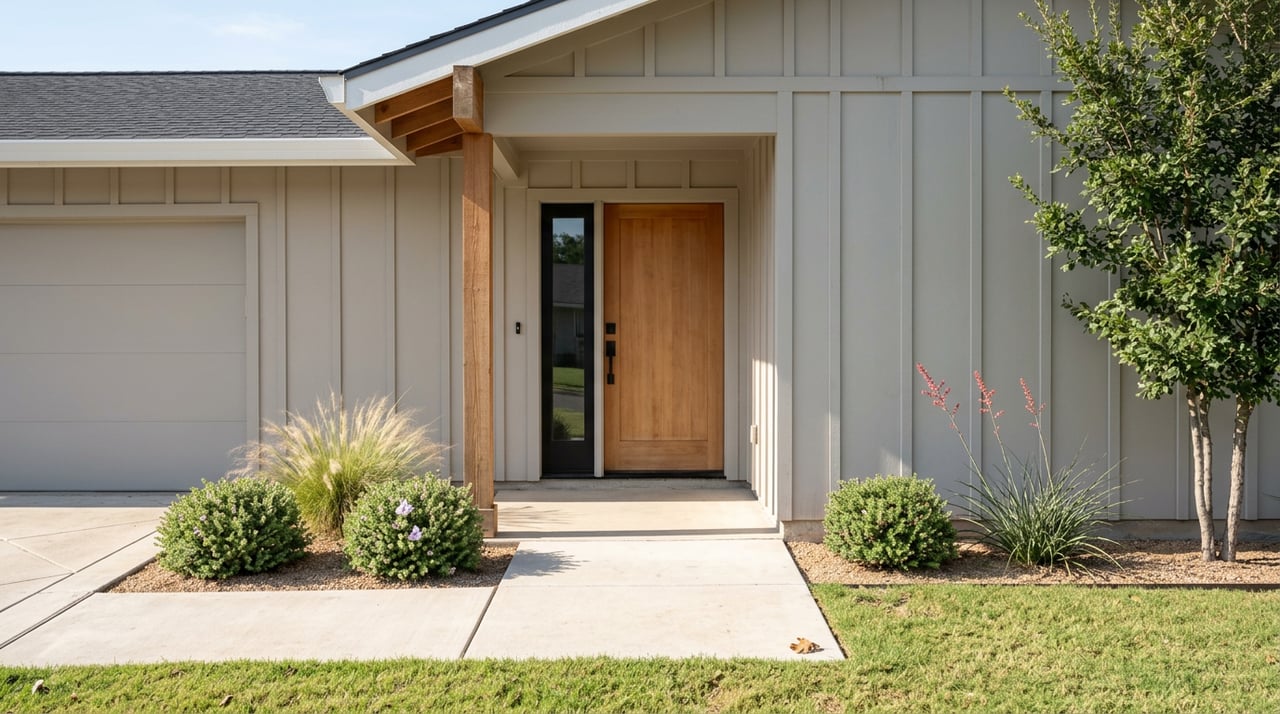
- Cedar Trails. Floor plans start in the low-to-mid $270s and include 4-bedroom, 2-bath single-story homes from 1,612 to 1,873 square feet, with 2-car garages, covered patios, granite countertops, shaker-style cabinets, vinyl plank flooring, and smart-home technology. This is the lowest new-build entry point in the city.
- Village at Nolan Heights. Production homes generally sit in the mid-$300s to mid-$400s with larger plans, 3-car garages, and subdivision amenities and finishes. A representative resale in the same subdivision recently listed at 2,442 square feet with a 3-car garage in the mid-market band.
- Pima Trail and Clore Road. Smaller-lot and lower-maintenance options such as Pima Trail and Clore Road, with full duplex buildings around the high-$300s in current examples. These matter for buyers thinking about house-hacking, VA-financed rental strategies, or downsizing.
- Heritage Oaks and Stone Lake Trails. Custom and semi-custom builds sit above the median. A recent Heritage Oaks listing came in near $470K on a third-acre lot, and Stone Lake Trails is trading larger corner lots into the same range.
The permit data reinforces where the momentum is. Harker Heights saw residential permit activity build steadily through 2025: 7 residential permits in January, 17 by February, 38 by March, 46 by April, 58 by June, and 64 by July. A nearly tenfold jump from January to July is not a normal seasonal pattern. It is a builder pipeline responding to sustained demand along one geographic axis.
Commercial development is following the same axis. A $11 million, 40,000-square-foot Crunch Fitness facility is under construction near I-14 in Harker Heights, and most of these new businesses are expected to open sometime in 2026, according to city officials. When gyms, quick-service retail, and casual dining cluster along a corridor at the same time as new rooftops, the resulting drive-time math tends to protect resale values in the surrounding subdivisions.
What the same budget buys in established resale
Cross the city west or into the older interior neighborhoods and the same $325K reshapes into something different.
Days on market run longer. Sellers can expect a slightly longer time on market, averaging 99 days, with 289 active listings indicating competition. That is friction for sellers and negotiating room for buyers. In established resale, the same budget more often buys a larger lot, mature tree canopy, a wider driveway, and a floor plan already tested by a decade or two of family use.
The tradeoff is real. Newer buyers who value warranty coverage, current insulation code, and smart-home wiring will pay a premium in the east-side corridor and get very little lot for it. Buyers who value shade, workshop space, or a garage that can hold a full-size truck plus tools will find resale delivers more square footage of usable land per dollar.
With 289 active listings and 151 new listings in the latest reporting period, buyers can usually negotiate most effectively on stale inventory rather than the cleanest turnkey homes. Read that carefully. The move is not to lowball the freshest listing on the market. The move is to identify a well-conditioned home that has sat past the 60-day mark and structure an offer that solves the seller's timeline problem.
The mechanism behind the split
Why does one median produce two markets? The short answer is that Harker Heights sits at an intersection of three distinct demand streams: military families, veterans, and move-up buyers who want a step above, plus a steady trickle of out-of-metro buyers. Each stream weights the tradeoff between new construction and resale differently.
VA-financed buyers on a PCS timeline often prioritize speed of close and known condition, which pushes them toward inspected resale or completed spec inventory rather than build-to-suit. Move-up families relocating within Bell County tend to value the amenity package and warranty structure of the east-side corridor. Out-of-metro buyers, who cannot easily see the home in person, gravitate to whichever segment offers the cleanest disclosures.
That is why the same $325K produces such different homes. The three buyer profiles are not competing for the same listing. They are competing inside their own sub-market, and the citywide median is just where those sub-markets happen to average out.
Two questions worth asking before you tour
If new construction is more efficient, why does resale still command interest? Because the "efficient" home is efficient only against its own comp set. A 1,700-square-foot new build on a 60-foot lot is not competing with a 2,400-square-foot resale on a quarter-acre. Buyers who tour both come away realizing they were actually deciding between two products, not two prices.
How much of the premium over Killeen is real? At roughly $144 per square foot, Harker Heights commands a premium over neighboring Killeen, and buyers pay it for the schools, the views, and the suburban quality of life. The premium is real, but it is not uniform. It is concentrated in the east-side corridor and along elevated streets with hill views. In flat interior blocks, the premium narrows considerably, and that is precisely where negotiating room lives.
Next step
The two-market reality means the right question is not "what is the median in Harker Heights." It is "which of the two markets fits my timeline, financing, and tolerance for tradeoffs." Answering that question before touring saves weeks and, in most cases, real money at closing.
If you would like a current, address-level read on how your budget maps to the east-side corridor versus established resale, Carlee Lopez can walk you through live comps, builder incentives worth negotiating, and the resale listings whose days-on-market count has quietly become an opportunity. Get your instant home valuation to start the conversation.